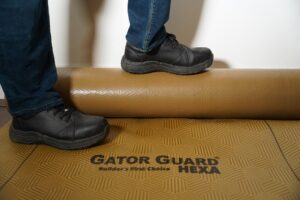
Summary: Carpet damage is a common and costly issue on construction and renovation sites. This guide explores the top carpet protection products contractors rely on to prevent stains, tears, and debris damage while maintaining professional job-site standards.
Carpet damage is one of the most common and most expensive preventable issues on residential and commercial job sites. Painting, remodelling, or even moving materials around can make carpets vulnerable to damage from dust, paint spills, scratches, moisture, heavy foot traffic, and more.
For contractors dealing with carpeted sites, protection products are not just for cleanliness. Carpet protection for contractors then becomes all about risk management, client trust, and profitability. Repairing or replacing carpet due to avoidable job-site damage can erase margins, delay completion, and damage professional reputation.
Contractors can safeguard carpets using reliable floor protection solutions. However, it is important to understand these products, how they work, and when to use them.
In this blog, we will be breaking down the most reliable protection solutions contractors can use for carpets.
Why Is Carpet Protection No Longer Optional on Modern Job Sites?
Contractor standards have changed. Clients today expect not only quality workmanship but also site discipline and damage prevention. For contractors operating in competitive markets, protection measures are no longer “nice to have”; they are part of baseline professional practice. Several realities make carpet protection essential. These include:
- Carpet Is Easily Damaged: Unlike hard flooring, carpet fibers trap debris, absorb liquids, and show staining immediately. Even minor spills can result in permanent discoloration.
- Liability Risks Are Increasing: Disputes over site damage are a frequent source of project friction. Preventive measures demonstrate professionalism and reduce claim scenarios.
- Cleanup Costs Add Up Quickly: Deep cleaning, stain treatment, and replacements cost far more than preventive coverage.
- Perception Influences Referrals: A protected site signals care, organization, and respect for the client’s property.
What Features Should Contractors Look for in a Carpet Protector?
Not all protection materials perform equally. Selecting the wrong solution can create new problems, including adhesive residue, tearing, or slip hazards. The wrong carpet protector can cost more in damage repairs. Hence, a contractor should look at various features before picking a carpet protector.
Key evaluation criteria include:
- Adhesion Quality: Products must have proper adhesion power to stay securely in place without damaging carpet fibers or backing.
- Residue Safety: Improper adhesives can leave sticky residues or cause discoloration. Hence, carpet protectors must be of good quality, offering residue safety.
- Tear Resistance: Materials used to protect carpets are also subjected to high-traffic. Hence, high-traffic areas require materials that resist puncture and tearing.
- Slip Stability: Loose coverings increase safety risks, particularly in active work zones. This is why selecting materials that offer slip-resistance is important to prevent any hazards.
- Ease of Installation & Removal: Time efficiency matters. Contractors benefit from solutions that apply quickly and remove cleanly.
- Surface Compatibility: Protection materials must be appropriate for carpet type, pile height, and project duration.
Top Protection Solutions Contractors Rely On
1. Temporary Carpet Protection (Best for Short-Duration Interior Work)
Temporary carpet protection film is one of the most widely used solutions for short-term interior work. It consists of a thin, self-adhesive plastic layer designed to shield carpet surfaces from dust, spills, and light traffic. When used correctly, film solutions provide excellent protection for controlled, low-impact activities.
Best Use Cases
- Painting projects
- Home staging or showings
- Moving furniture or equipment
- Short renovation tasks
Advantages
- Rapid application
- Conforms easily to surfaces
- Effective dust and debris barrier
- Clean visual presentation
Limitations
- Designed for limited durations
- Less suited for moisture-heavy work
- May require careful removal timing
2. Adhesive Carpet Protection (Best for Stability and Moderate Traffic)
Adhesive carpet protection systems use engineered adhesion layers designed to hold firmly under moderate traffic while minimizing fiber disruption.
These solutions are preferred when:
- Foot traffic is continuou
- Movement of tools or ladders occurs
- Protection must remain fixed over longer intervals
Benefits
- Improved positional stability
- Reduced shifting and wrinkling
- Better resistance to curling edges
Important Considerations
- Adhesion strength must match carpet type
- An overextended application can increase residual risks
- Environmental factors (heat/humidity) matter
3. Heavy-Duty Carpet Protector (Best for High-Traffic Zones)
Contractors should choose heavy-duty carpet protectors in high-traffic job zones, such as hallways, staircases, and commercial interiors that demand stronger materials. Although often more expensive upfront, these protectors frequently deliver better cost efficiency in demanding environments.
A heavy-duty carpet protector typically features thicker construction designed to withstand:
- Tool movement
- Repeated foot traffic
- Impact from the equipment
- Extended project timelines
Why Contractors Use Them
- Superior durability
- Reduced tearing risk
- Better load distribution
- Lower replacement frequency
4. Non-Adhesive Carpet Covers (Best for Delicate Surfaces)
Non-adhesive solutions remain valuable under specific conditions. These coverings work best in low-disturbance scenarios rather than heavy operational spaces.
They are commonly used when:
- Carpet surfaces are delicate
- Adhesives are unsuitable
- Coverage duration is very short
- Environmental sensitivity exists
Advantages
- No residue risk
- Reusable options available
- Suitable for quick transitions
Drawbacks
- May shift under traffic
- Require manual positioning
- Less effective for active work zones
5. Multi-Surface Protection Systems (Best for Complex Projects)
Many projects involve combinations of carpet, hardwood, tile, and stone. Multi-surface protection systems are designed to simplify site management by offering flexible protection across different flooring types. These systems are especially valuable when contractors need adaptability without sacrificing protection quality.
Where It Performs Well
- Whole-home renovations
- Mixed-material interiors
- Projects requiring workflow efficiency
Why Contractors Adopt Them
- Reduced material complexity
- Faster installation logistics
- Consistent site protection strategy
- Improved operational efficiency
How Can Contractors Quickly Choose the Right Protection Solution?
- For short-duration, light work, use Film-based protection
- For high-traffic zones, use Heavy-duty solutions
- For delicate carpets, use Low-tack or non-adhesive coverings
- For mixed flooring projects, use Multi-surface systems
Note: Always match protection to risk, duration, and site activity
What Carpet Protection Mistakes Do Contractors Commonly Make?
Some common carpet protection mistakes contractors make include:
- Using incorrect adhesion strength
- Leaving the protection applied too long
- Ignoring moisture and humidity
- Choosing products based only on price
- Overlooking site traffic levels
- Skipping manufacturer guidelines
How Does Carpet Protection Improve Contractor Profitability?
Protection is often viewed as an expense. But operationally, it functions as a cost-control mechanism. Choosing the right protectors for carpets offers:
- Reduced Cleanup Time
- Lower Damage Claims
- Improved Workflow Efficiency
- Stronger Client Confidence
Final Thoughts
Consistent use of protection systems reflects experience, foresight, and professional discipline. Rather than reacting to accidental damage, skilled contractors build preventive strategies into every project.
Carpet protection safeguards:
- Client property
- Project timelines
- Contractor margins
- Brand reputation
In modern contracting environments, protection is not merely about covering surfaces. It is about protecting business outcomes. And that is exactly what Gator Guard offers. Gator Guard provides durable carpet protection solutions designed to help contractors protect carpets, reduce cleanup costs, and maintain professional job-site standards.
Frequently Asked Questions
1. Do Adhesive-Based Carpet Protectors Leave Residue?
High-quality systems are designed for clean removal when used within recommended timeframes. Residue issues typically arise from improper product selection or excessive application duration.
2. Is Carpet Protection Necessary for Small Projects?
Yes, carpet protection is necessary even for small projects. Even minor work introduces risks from dust, tools, and movement. Protection is often more about risk probability than project size.
3. Are Carpet Protection Materials Reusable?
Yes, some non-adhesive and heavy-duty carpet protection solutions are reusable. Film-based products are generally single-use.
4. What is the best floor protection for carpets?
Carpet protection film is one of the most widely used solutions for protecting carpets during renovations and construction.
5. What is the best way to protect carpet during construction?
The best way to protect carpet during construction is by applying carpet protection film or heavy-duty carpet covers. These carpet protectors protect the carpet surface from dust, paint spills, scratches, and damage from high traffic.