When a building is renovated or construction is ongoing, floors are often overlooked. It is one of the most common and expensive mistakes to overlook floor damage. Scratches, stains, cracks, and impact damage can happen quickly when heavy foot traffic, tools, and equipment are involved. That’s why you need the right protective floor covering that preserves the quality and value of your space.
Whether you are a contractor, property manager, or homeowner, this guide is for you. It discusses how to select the best floor protection solution for your specific project, without cutting corners or relying on one-size-fits-all options.
Read on!
Why Is Floor Protection Non-Negotiable for Any Project?
Every floor surface, hardwood, tile, vinyl, concrete, or carpet, has its own vulnerabilities. Dust, debris, dropped tools, rolling carts, moisture, and paint spills can all cause permanent damage if left unprotected.
Using a professional-grade protective floor covering helps you:
- Prevent costly repairs or replacements
- Maintain safety by reducing slips and trip hazards
- Meet client expectations and professional standards
- Protect finished floors while other trades are still working
Relying on cardboard or plastic sheets isn’t wise for long-term or high-traffic projects. You need professional heavy-duty floor protection.
How To Choose The Right Protective Floor Covering?
Here are the multiple steps that will help you select the right protective floor covering:
Step 1: Identify the Floor Type To Protect
What’s the material that you want to protect?
Understand the surface beneath before choosing an appropriate covering.
Here are different types of surfaces and what they need:
- Hardwood & Engineered Wood: Needs breathable protection to prevent trapped moisture and surface scratches.
- Tile & Stone: Requires impact-resistant, heavy-duty floor protection to prevent cracking or chipping.
- Carpet: Needs spill-resistant, slip-safe coverings that won’t damage fibers or adhesives.
- Concrete & Epoxy Floors: Often need protection from staining, scuffing, and chemical exposure.
Understanding the floor type will help prevent mistakes and floor damage.
Step 2: Consider the Level of Traffic and Activity
Not all projects are equal in intensity. Ask yourself the following questions:
- Will heavy equipment or carts be rolling across the floor?
- How many workers will be on-site daily?
- Is the project short-term or long-term?
In high-impact environments like commercial builds or full renovations, heavy-duty floor protection is essential. Thicker, rigid systems absorb impact better and stay in place, even under constant movement. For lighter projects, flexible coverings are sufficient, but durability shouldn’t be compromised.
Step 3: Look for Stability, Grip, and Safety
One of the biggest issues with low-quality floor coverings is their tendency to move. Shifting materials creates tripping hazards and exposes the floor underneath.
A reliable protective floor covering should:
- Lock or lay flat without curling
- Provide slip resistance for worker safety
- Stay secure without excessive taping
- Protect edges and seams from lifting
Professional-grade protective floor covering stays firmly in place and performs well, especially in demanding work environments.
Step 4: Moisture and Spill Resistance Matter
Water, paint, adhesives, and chemicals are potential sources of spills that can leave permanent marks on your floors. Especially if you have carpet underneath, these items can seep through and permanently stain or warp flooring.
High-quality floor protection materials act as a barrier while still allowing the floor to breathe when necessary. This balance is especially important for wood and newly installed surfaces that are still curing or settling.
Step 5: Ease of Installation and Removal
You don’t want to spend days covering and uncovering the floor. Thus, time is a key factor in choosing the right material for covering. You need a protection system that’s quick to install, easy to cut to size, and just as simple to remove without leaving residue or damage behind.
Avoid coverings that:
- Require excessive tape
- Tear during removal
- Leave adhesive marks
- Can’t be reused
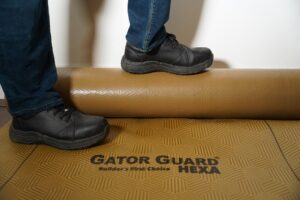
Professional solutions like Gator Guard floor protection are designed with efficiency in mind, helping teams move faster.
Step 6: Reusability and Cost Efficiency
If you are a contractor, it is wise to invest in durable solutions because upfront cost matters, but long-term value matters more. Disposable materials seem cheaper, but replacing them repeatedly adds up.
Gator shields are a brilliant option that can be reused across multiple projects, making them a cost-effective choice for contractors and facility managers who need reliable protection again and again.
Matching the Right Protection to the Right Project
Check out what kind of covering is suitable for which project:
- Residential Remodels: Need lightweight but durable coverings with good grip
- Commercial Renovations: Need heavy-duty floor protection with impact resistance
- New Construction: Need rigid panel systems that handle constant traffic
- High-end Finishes: Need non-marking, breathable solutions to preserve surface integrity
Consult professionals like Gator Guard to match the right floor covering to a project and avoid costly mistakes.
Why Choose Gator Guard for Floor Protection?
Gator Guard stands out as the most reliable professional floor protection service provider. Our innovative professional-grade solutions are engineered for real-world job sites, offering superior durability, safety, and ease of use.
We provide:
- Purpose-built solutions for residential and commercial projects
- Reliable heavy-duty floor protection that stays in place
- Products like Gator Shield for long-lasting performance
- A smarter alternative to disposable, low-quality coverings
Conclusion
Timing is of the essence in any construction project. Whether you are a contractor or renovating your own home, don’t waste time choosing a floor protection covering. Consult Gator Guard and allow us to help you protect your floors. Be it hardwood, tile, carpet, or vinyl, we offer tailored solutions for your needs.
Frequently Asked Questions (FAQs)
1. Why is floor protection important during construction or renovation?
During construction or renovation, floors are exposed to heavy foot traffic, tools, equipment, dust, paint, and moisture. Without proper protection, floors can get scratched, stained, or cracked, leading to expensive repairs or replacements.
2. Can I use cardboard or plastic sheets to protect floors?
Cardboard and plastic sheets are often used, but they are not reliable for long-term or high-traffic projects. They can shift, tear easily, and allow moisture or spills to seep through. Professional floor protection provides better stability, safety, and durability.
3. What type of floor protection is best for hardwood floors?
Hardwood floors need breathable floor protection that prevents scratches while allowing moisture to escape. This helps avoid warping, staining, or long-term damage, especially during extended renovation projects.
4. Is heavy-duty floor protection necessary for residential projects?
Not always. Light renovations may only need flexible protection. However, for projects with frequent foot traffic, moving furniture, or tools, heavy-duty floor protection is recommended to prevent accidental damage.
5. Can floor protection materials be reused?
Yes, many professional-grade floor protection systems are designed to be reusable. Reusable solutions are more cost-effective in the long run and are commonly used by contractors across multiple projects.
6. Does floor protection help improve job-site safety?
Yes. High-quality floor protection reduces slipping and tripping hazards by staying firmly in place. This helps maintain a safer work environment for contractors and workers on-site.
7. How long can protective floor covering stay installed?
Professional floor protection can stay in place for weeks or even months, depending on the product and project conditions. It is designed to handle ongoing work without damaging the floor underneath.
8. How do I choose the right floor protection for my project?
Start by identifying the floor type, level of traffic, and duration of the project. For best results, consult professionals like Gator Guard to select a solution that matches your specific needs.
9. Does floor protection leave residue after removal?
High-quality professional floor protection is designed for clean removal and should not leave adhesive marks or residue when installed and removed correctly.
10. Can floor protection be used on newly installed floors?
Yes. Protective floor coverings are commonly used on newly installed floors to protect them while other work is completed. Breathable and non-marking solutions are especially important in these cases.